

Real vs Faux Leather Jackets: What American Buyers Need to Know
A clear-eyed comparison of genuine leather and synthetic alternatives — covering quality, longevity, sustainability, and true cost of ownership.
The leather jacket market has never offered more options. Alongside traditional genuine leather, an expanding range of synthetic and plant-based alternatives now compete for American buyers' attention. The marketing can be compelling — terms like 'vegan leather,' 'eco-leather,' and 'premium faux' suggest you can get the look and feel of real leather without the high price tag or ethical considerations.
But what are you actually getting? The differences between real and faux leather go far beyond surface appearance. They affect how the jacket feels on your skin, how it performs across seasons, how long it lasts, and — perhaps most surprisingly — which option is genuinely better for the environment. This guide breaks down the comparison so you can make an informed decision.
1. What Is Real Leather?

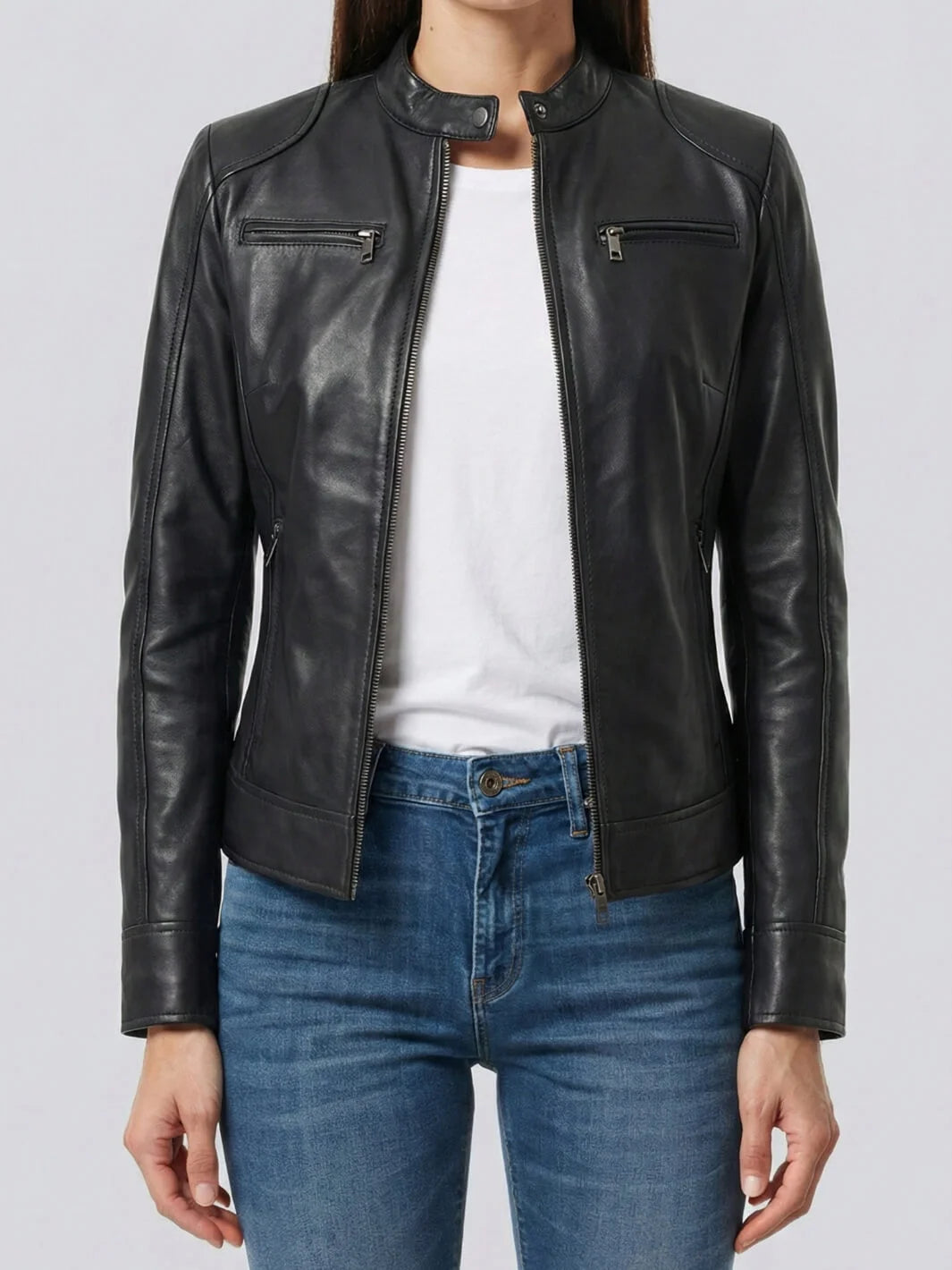
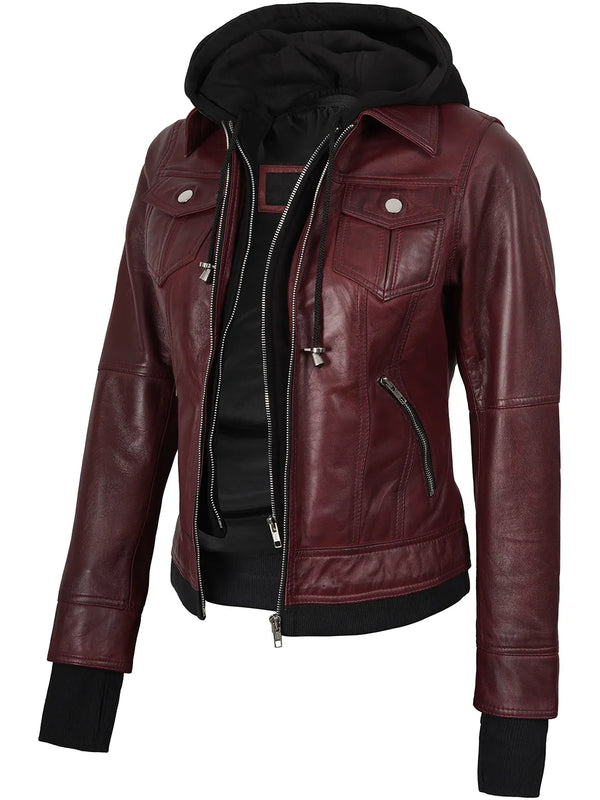
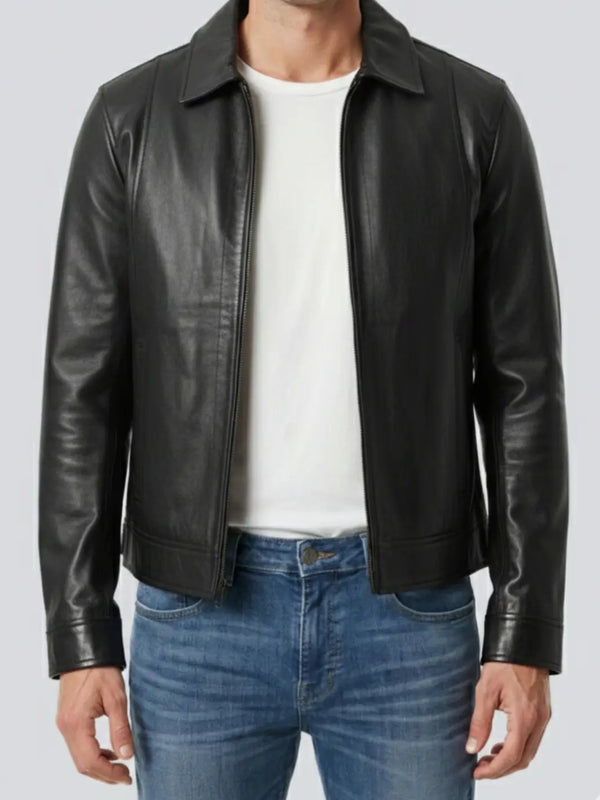
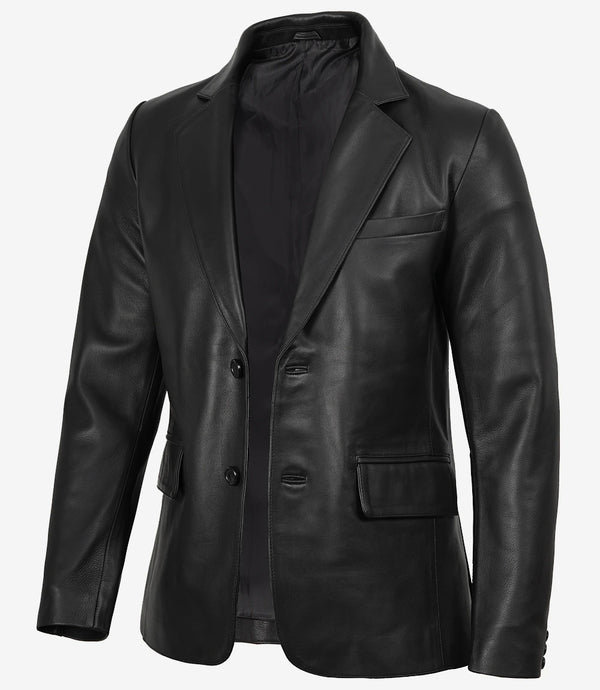
Real leather is the tanned hide of an animal, most commonly cowhide, goatskin, or lambskin. For premium jackets — like those in the Decrum collection — full-grain Nappa lambskin is the material of choice. Full-grain means the outermost layer of the hide is preserved intact, retaining the natural grain pattern and the leather's strongest fibers.
Lambskin is prized for its exceptional softness, natural drape, and lightweight feel. It typically measures 0.6–0.8mm in thickness — thin enough for fluid movement, substantial enough for years of daily wear. Quality leather is tanned using processes that enhance durability while preserving the hide's natural characteristics. Decrum uses environmentally responsible tanning methods that minimize water and chemical waste without compromising the leather's softness or longevity.
2. What Is Faux Leather?
Faux leather — also marketed as synthetic leather, PU leather, or vegan leather — is typically a fabric base (often polyester) coated with polyurethane (PU) or polyvinyl chloride (PVC). The coating is textured and finished to resemble the look and feel of genuine leather.
Higher-quality faux leathers can look convincing at first glance, but the resemblance is largely visual. The material behaves differently in ways that become apparent over time: it doesn't breathe well, it doesn't develop a patina, and its surface layer will eventually crack and peel regardless of how well you care for it.
3. Side-by-Side Comparison
| Feature | Real Leather | Faux Leather |
|---|---|---|
| Material | Animal hide (lambskin, cowhide, goatskin) | PU (polyurethane) or PVC on fabric base |
| Feel | Soft, warm, molds to body over time | Smooth but can feel plasticky; doesn't soften |
| Durability | 10–30+ years with care | 2–5 years before peeling or cracking |
| Breathability | Naturally breathable; regulates temperature | Limited; can feel clammy in heat |
| Aging | Develops beautiful patina | Deteriorates; surface peels and flakes |
| Sustainability | Long-lasting; fewer replacements over time | Petroleum-based; shorter lifecycle |
| Price Range (USD) | $150–$600 | $40–$150 |
| Repairability | Can be reconditioned and repaired | Difficult to repair once surface cracks |
4. The Feel Factor

This is where the difference is most immediately noticeable. Real lambskin leather has a warmth and suppleness that synthetic materials cannot replicate. It molds to your body shape over time, creating a fit that becomes uniquely yours. The texture has a natural variation — subtle grain patterns, slight differences in shade — that signals authenticity and craftsmanship.
Faux leather feels uniform by comparison. It can be smooth and initially pleasant, but it lacks the organic warmth of real hide. In warm conditions, PU-coated fabrics can feel clammy against the skin because they don't breathe. In cold conditions, they're noticeably less insulating than genuine leather. The longer you own both, the wider the gap becomes.
5. Durability and Aging
This is the factor that most clearly separates real from faux, and it's where the true cost equation becomes apparent.
6. Real Leather Jackets Worth Owning
7. The Sustainability Question

This is where the conversation gets nuanced, and where marketing claims often mislead.
Faux leather is frequently positioned as the sustainable choice because it doesn't involve animal hides. On a surface level, this makes intuitive sense. But the full picture tells a different story.
PU and PVC are petroleum-derived plastics. Their production involves fossil fuels and chemical processes. When a faux leather jacket degrades — and it will, within a few years — it enters the waste stream as plastic that won't biodegrade for centuries. If you replace a faux leather jacket every three years, you'll generate five to ten times more waste than a single real leather jacket that lasts decades.
Plant-based leather alternatives (made from pineapple fiber, mushroom mycelium, or cactus) represent an emerging middle ground, but as of 2026, these materials haven't yet matched genuine leather for durability, feel, or widespread availability at competitive prices.
8. True Cost of Ownership
Price tag alone is a poor indicator of value. Consider these real numbers:
| Factor | Faux Leather Jacket | Decrum Real Leather Jacket |
|---|---|---|
| Purchase price | ~USD $70 | ~USD $200 |
| Expected lifespan | ~3 years | 15+ years |
| Cost per year | ~$23/year | ~$13/year |
| Appearance over time | Peeling, cracking, loss of shape | Softening, patina, personalized fit |
| Replacements over 15 years | 5 jackets (~$350 total) | 1 jacket ($200 total) |
Factor in the declining appearance of faux leather (the peeling, the cracking, the loss of shape) versus the improving character of real leather (the softening, the patina, the personalized fit), and the value equation becomes even more decisive.
9. How to Tell Real from Faux
| Test | Real Leather | Faux Leather |
|---|---|---|
| Touch | Feels warm almost immediately; press your finger in and it changes color slightly and springs back | Feels cool and slightly plastic; stays rigid when pressed |
| Smell | Rich, organic scent that's immediately recognizable | No scent or faintly smells of plastic or chemicals |
| Edge | Unfinished edge shows rough, fibrous texture | Reveals a smooth, fabric-like base layer beneath the coating |
| Water | A small drop absorbs slowly, slightly darkening the surface | Water beads on the surface without absorbing |
10. Making the Right Choice
Faux leather serves a purpose. For fashion-forward pieces you intend to wear for a season or two, or if animal products are a firm personal boundary, modern synthetics offer reasonable short-term alternatives.
Decrum's commitment to 100% full-grain Nappa lambskin, environmentally responsible tanning methods, and direct-to-consumer pricing means you can own genuine leather without the inflated price tags of traditional retail. It's the quality your wardrobe deserves, at a price that respects your budget.
Discover the difference
Shop Real Leather Jackets
Every jacket is made from real leather, handcrafted with care, and backed by a 30-day satisfaction guarantee. Free shipping across the USA.
Related guides: types of leather (grades & finishes) · how to tell if leather is real · full-grain vs top-grain · faux vs real leather · lambskin vs cowhide


